Building strong teams and structures
This guide is also available in PDF format.
Organizing is teamwork. Together, we achieve more. That means it is crucial to pay attention to what good teamwork requires and how to structure collaboration. When this is clear, it becomes much easier to welcome new people and keep them involved. People want to feel that they belong, that they have a place, and that they are part of something bigger. A clear structure also makes it easier to delegate tasks and share responsibility.
Design strong teamsThink back to a fun and successful team you have been part of, at work, school, in sports, or within a social movement. Chances are, you will recognize the following nine factors in that experience. These are elements you can intentionally build into the teams within your own organization.
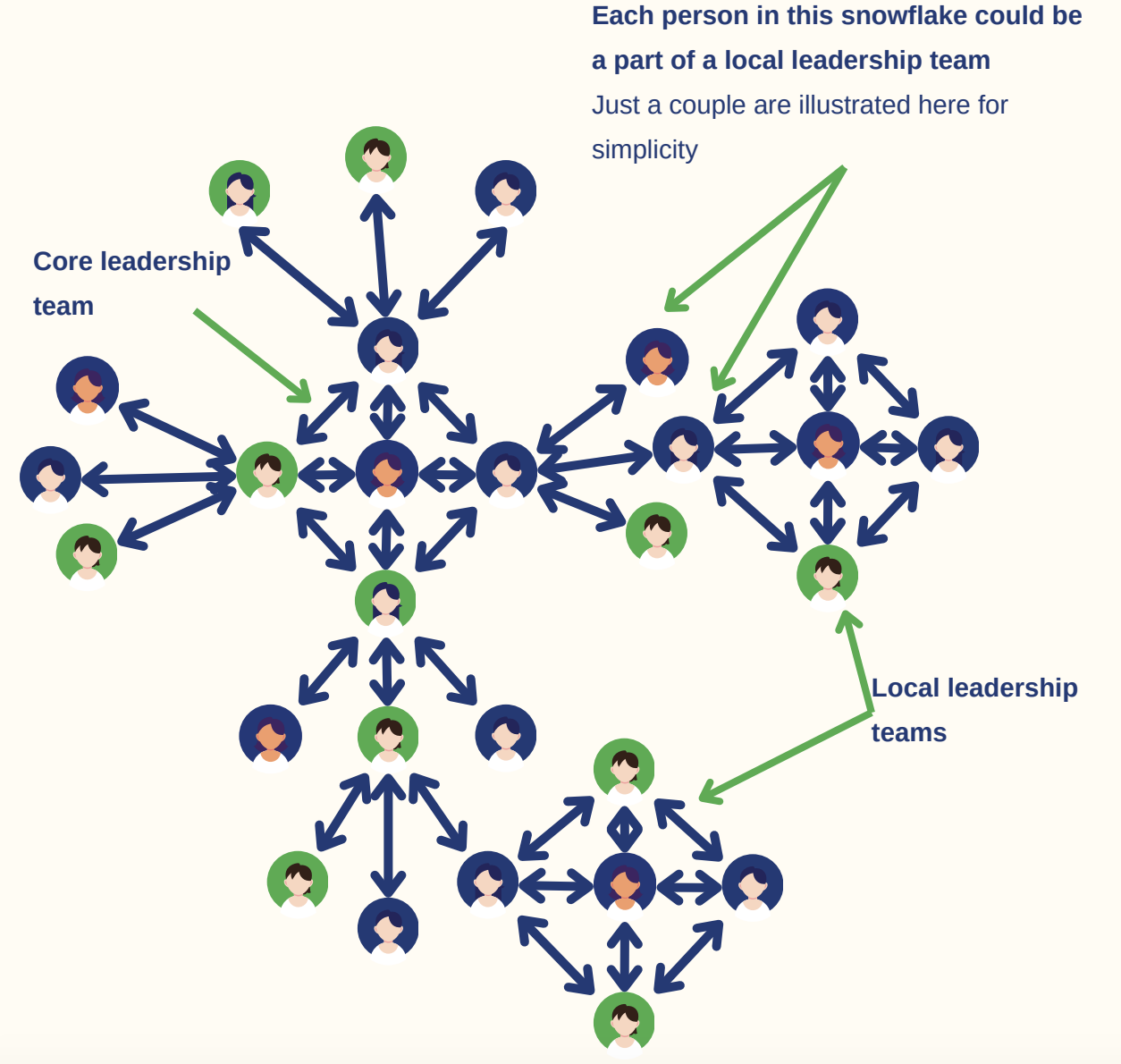
| StructureAn organizing structure works like a snowflake. Teams work together, and an infinite number of new teams can be added. Everyone understands what is expected of these teams and how they communicate and make decisions together. It is also clear to everyone where, when, and by whom decisions are made, whether through voting, consent, a board, or a general assembly. Any model can work, as long as it is clear. The Snowflake modelThe snowflake model was introduced by Marshall Ganz, an American political scientist and activist, and has become an important framework within community organizing. The model shows how campaigns and movements can scale up without losing their people: local leaders are given responsibility for their own teams and territory, while the central hub retains strategic oversight. This structure is effective because it combines autonomy with accountability, volunteers feel a sense of ownership, and organizers are less likely to burn out. For groups and social movements, this means learning how to build sustainable engagement by not only mobilizing people, but also enabling them to lead. |
Finally
Interested in attending a training? Contact us here.
This guide is part of the ‘Toolbox for Movements’. This toolbox contains more short digital guides, offering fundamental knowledge about strategy, movement building, campaigning, and organizing.
We also love to learn. So, if you have any ideas for improving or adding to this guide based on your experiences, let us know!